
Accurate results don’t matter if the machine control system slows the crew down.
Machine control systems deliver accuracy. The problem is the overhead: setup steps, dependencies, and workflows that slow work down—or stop it—when site conditions change.
On many jobsites, crews manage:
- models before work can start
- localization routines and base station setup
- benching and elevation checks
- workflows that depend on a single trained person
- When any part of that chain breaks—signal drops, setup drifts, or the crew changes—productivity takes the hit.
That’s why adoption stays uneven: many systems are accurate, but they’re not designed around real operators, real machines, and real jobsite pace.
WHY FIT MATTERS MORE THAN FEATURES
Contractors are under pressure to:
- get grade right the first time
- reduce rework
- keep crews safe
- maintain productivity with mixed experience levels
In this environment, a system that adds complexity is a liability—even if it’s precise.
Machine control works when it fits:
- the machine
- the operator
- the type of work
When those align, crews use the system consistently—and that’s when accuracy turns into real results.
HOW CHCNAV IS BUILT AROUND CREWS
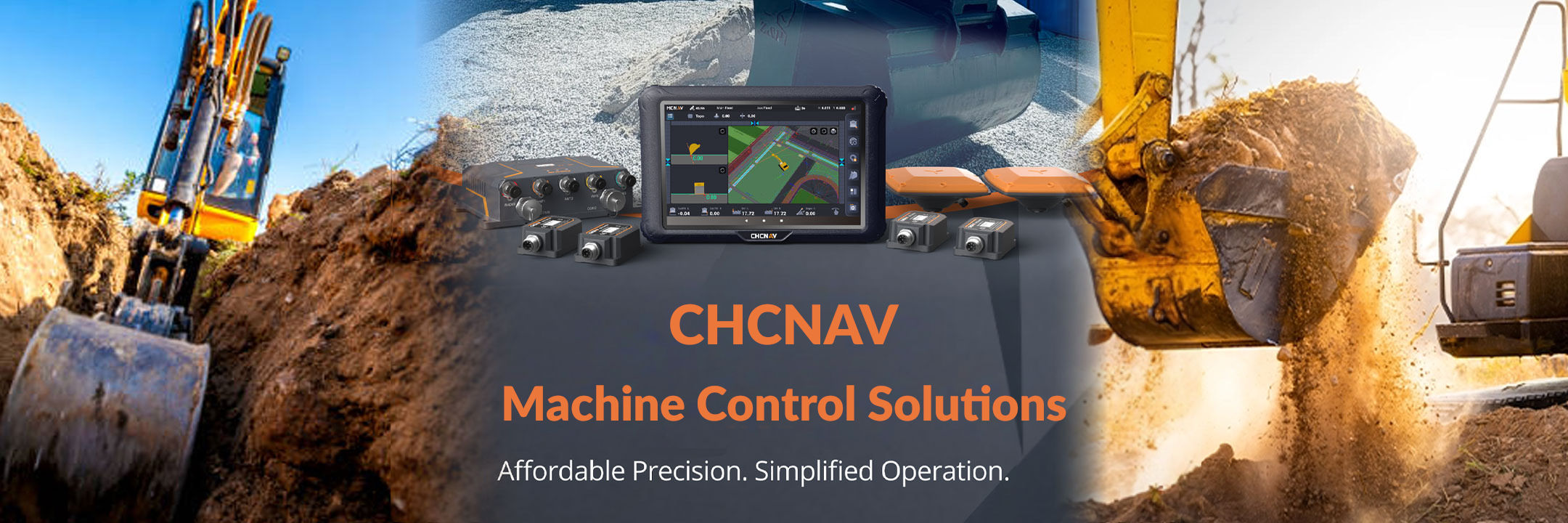
CHCNAV machine control solutions are designed with one goal in mind: remove the steps that interrupt work.
That includes:
- in‑field design that crews can build on the fly for typical excavation tasks
- network corrections that remove localization routines and base setup
- GNSS antennas that eliminate benching and continuously update elevation
- multi‑constellation tracking to stay reliable across terrain and site conditions
- simplified workflows operators can learn without weeks of training
ONE APPROACH — DIFFERENT EXPERIENCE LEVELS
Machine control doesn’t need to look the same for every crew. CHCNAV supports different experience levels and different types of work:
- crews handling residential or repeatable excavation can work effectively without models
- contractors managing commercial or complex grading can step into advanced workflows when needed
- operators can start simple, build confidence, and expand capability over time
The system doesn’t force complexity. It adapts to the work.
OPERATOR-FIRST DETAILS THAT MATTER ON SITE
These details show up every day on the jobsite:
- sensors mounted on the dog bone make bucket changes straightforward
- support for multiple buckets without complicated recalibration
- clear on-screen guidance — elevation, direction, easting, and northing — helps newer operators stay oriented without constant supervision
- simple workflows make it easier when crews change or new people step in
- training is measured in hours, not weeks
SUPPORT THAT HELPS ADOPTION — NOT JUST INSTALLATION
CHCNAV systems are supported through Benchmark, the authorized CHCNAV dealer crews work with during installation and in the field.
Installation help covers the details that tend to cause problems later — cable routing that won’t snag during operation, controller placement that works in the cab, and setup choices that don’t get revisited every few days.
Training is provided so operators understand what the system is showing on screen and can use it as part of normal work.
Support is available when needed. Most issues are handled by Benchmark’s trained support team without stopping work. When on-site assistance is required, a technician can typically reach the jobsite within 2–4 hours.
Check which machine control setup fits your work
If machine control has felt complicated, overkill, or out of reach, it’s worth a fresh look at what fits your machines, your operators, and your typical jobs.
Share a few details about your equipment and the type of work you do. We’ll help you pressure‑test fit and recommend an approach that makes sense for your jobsite—without forcing complexity.